


Hitch Cargo Carrier vs. Small Utility Trailer: Which One Do You Need?
When you need more cargo space than your vehicle provides, two common options are a hitch-mounted cargo carrier and a small utility trailer.
Both can add useful carrying space, but they're designed for very different jobs. A trailer can handle larger and heavier loads, while a platform cargo carrier offers something many people value even more for everyday use: simplicity.
Here's how to decide which makes more sense for you.
The Biggest Difference: How the Load Is Supported
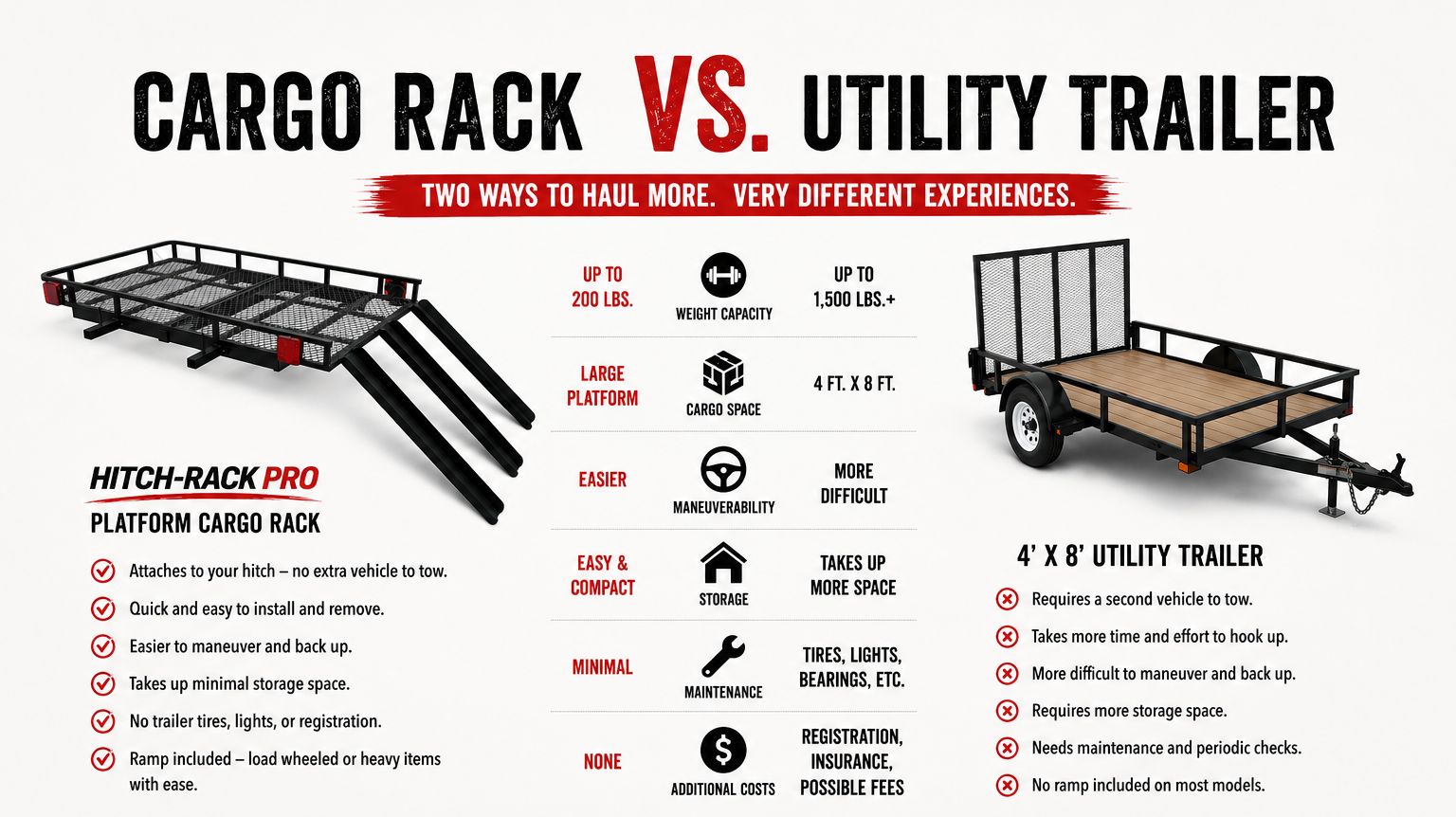
A hitch-mounted cargo carrier attaches directly to the vehicle's receiver. The vehicle and hitch support the entire weight of the carrier and its cargo.
A utility trailer is different. Its axle and tires support most of the trailer and cargo weight, while the hitch connects the trailer to the tow vehicle.
This gives a trailer a major advantage when you need to transport large or heavy loads.
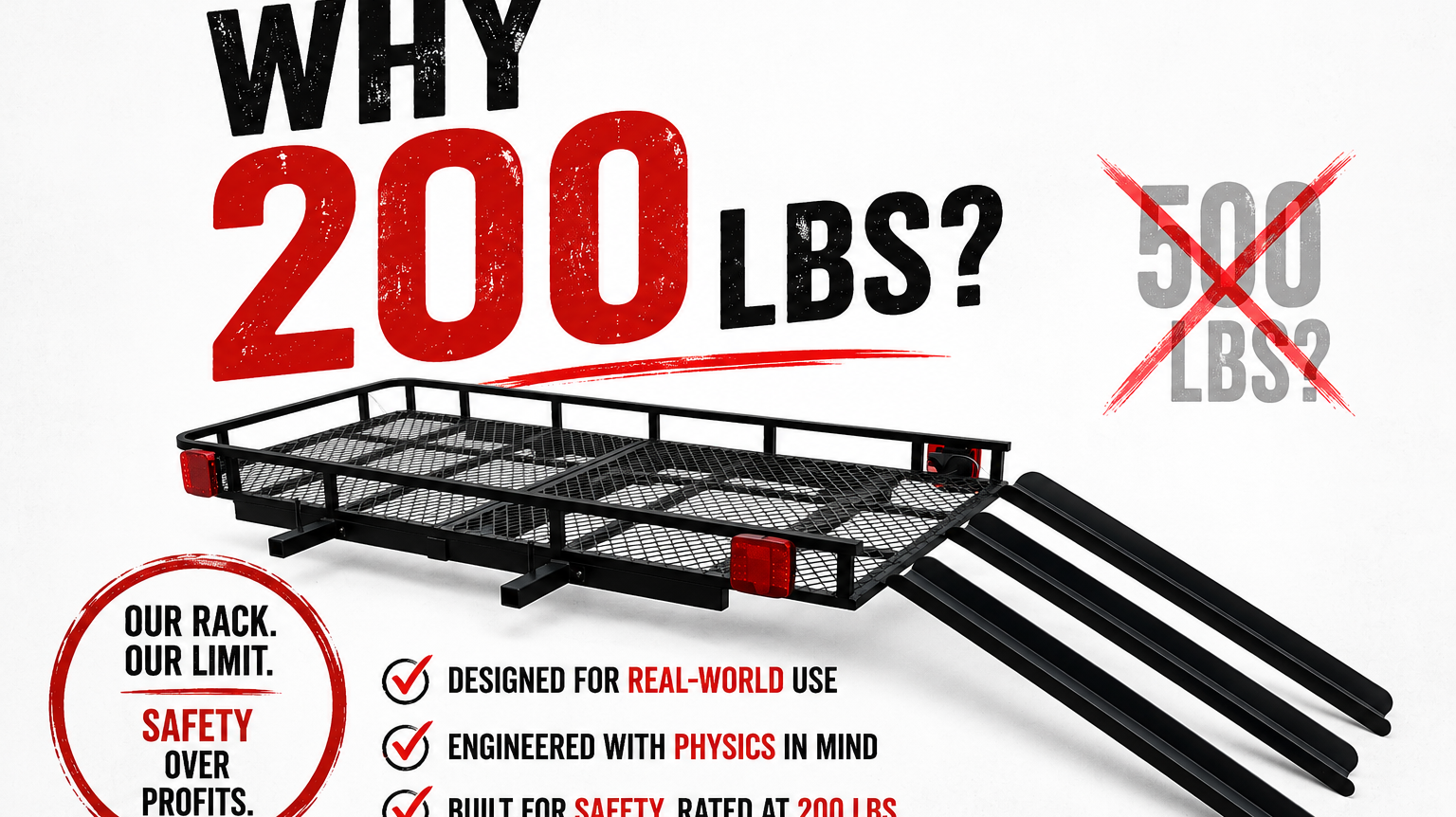
A cargo carrier isn't a substitute for a trailer when the job requires more weight or space than the vehicle and hitch can safely support.
But not every job requires a trailer.
Why Choose a Platform Cargo Carrier?
For many everyday hauling jobs, connecting and towing a trailer can be more equipment than you really need.
A platform cargo carrier can provide extra space for things such as:
- Camping equipment
- Coolers
- Storage totes
- Luggage
- Tools
- Gardening supplies
- Sports and outdoor equipment
- Other bulky items you would rather keep outside the vehicle
You simply install the carrier into the receiver, secure your cargo, and go.
There's no second set of wheels following you down the road.
No Trailer to Maneuver
One of the biggest advantages of a hitch cargo carrier is maneuverability.
If you've ever backed up with a trailer, you know it takes some practice. A trailer moves independently of the vehicle and reacts in the opposite direction when backing.
A platform carrier stays attached to the vehicle as one unit.
You still need to remember that the carrier extends the overall length of your vehicle, but parking and backing are generally much simpler than they are with a trailer.
That can make a cargo carrier especially convenient for campgrounds, parking lots, hotels, trailheads, and other places where maneuvering a trailer may be inconvenient.
Storage Is Much Easier
A utility trailer needs somewhere to live when you're not using it.
Even a relatively small trailer can take up a substantial amount of garage or driveway space. Depending on where you live, you may also have neighborhood, HOA, or local restrictions regarding trailer storage.
A hitch-mounted platform is considerably easier to store.
For someone who only needs extra cargo capacity occasionally, that difference alone can make a platform carrier more practical.
Make Storage and Handling Even Easier With a Rack Lift
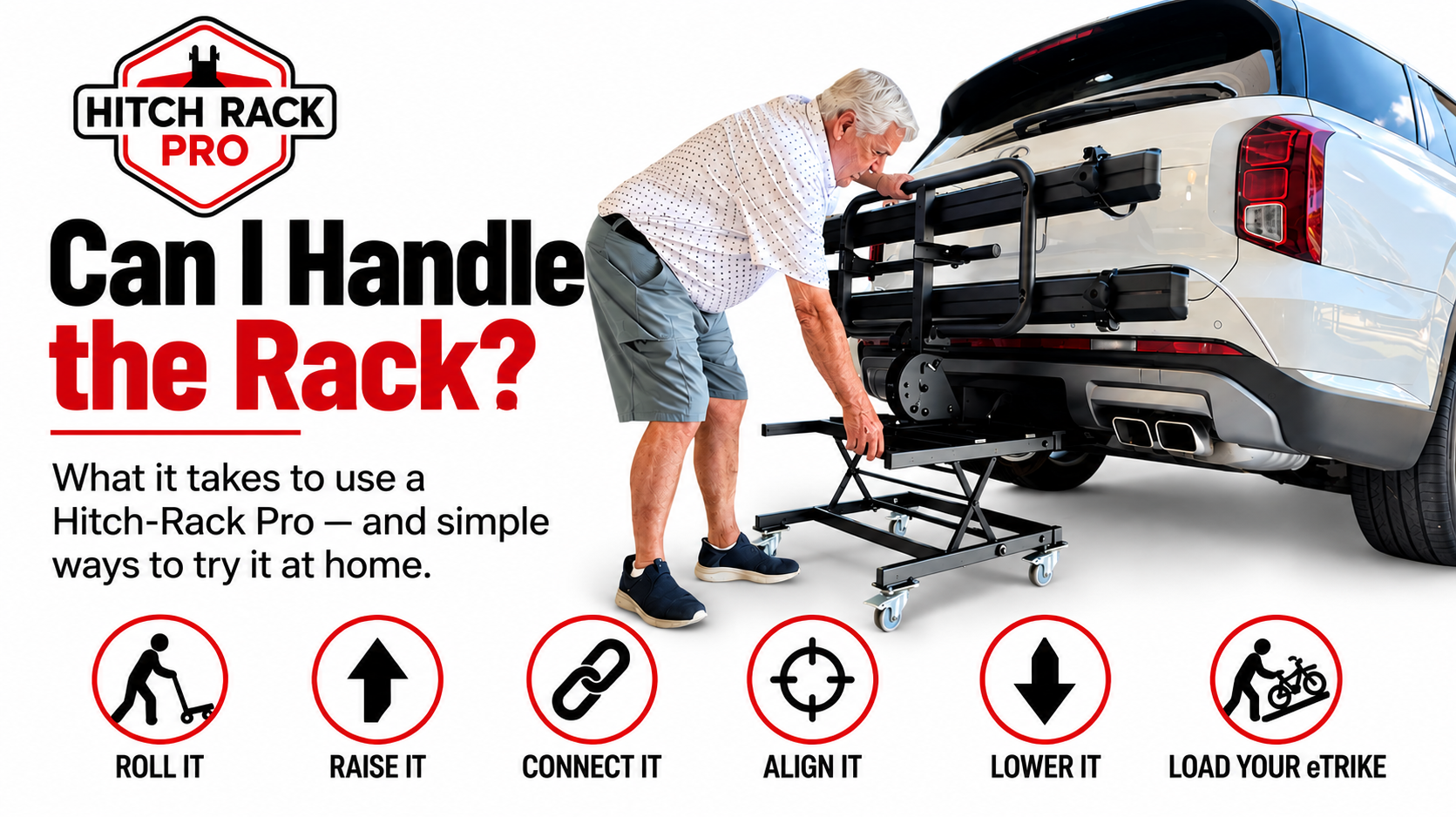
Even though a platform carrier takes up much less storage space than a utility trailer, a large carrier can still be heavy and awkward to move by yourself.
That's where the Hitch-Rack Pro Rack Lift can make a big difference.
The Rack Lift is designed to make installing, removing, and storing your carrier easier. Instead of lifting and carrying the rack between your vehicle and its storage location, the Rack Lift helps support the carrier so it can be moved and positioned with much less effort.
This is particularly helpful with a large platform rack. The size that makes the carrier so useful for hauling cargo can also make it cumbersome to handle when it's off the vehicle.
The Rack Lift also provides a convenient way to store the carrier when you're not using it. Rather than taking up space like a utility trailer or requiring you to wrestle a heavy rack into a storage location, the carrier can remain supported and ready for the next time you need it.
For people who want the extra cargo space of a large platform but don't want the hassle of handling a heavy carrier, the Rack Lift makes owning and using the rack considerably more convenient.
A Trailer Has Its Own Maintenance
Trailers add additional equipment that needs attention.
Depending on the trailer, that can include tires, wheel bearings, lights, wiring, couplers, safety chains, and other components.
There may also be registration, licensing, inspection, or insurance requirements depending on where you live and the type of trailer you own.
A hitch-mounted cargo carrier is much simpler equipment.
That's part of its appeal.
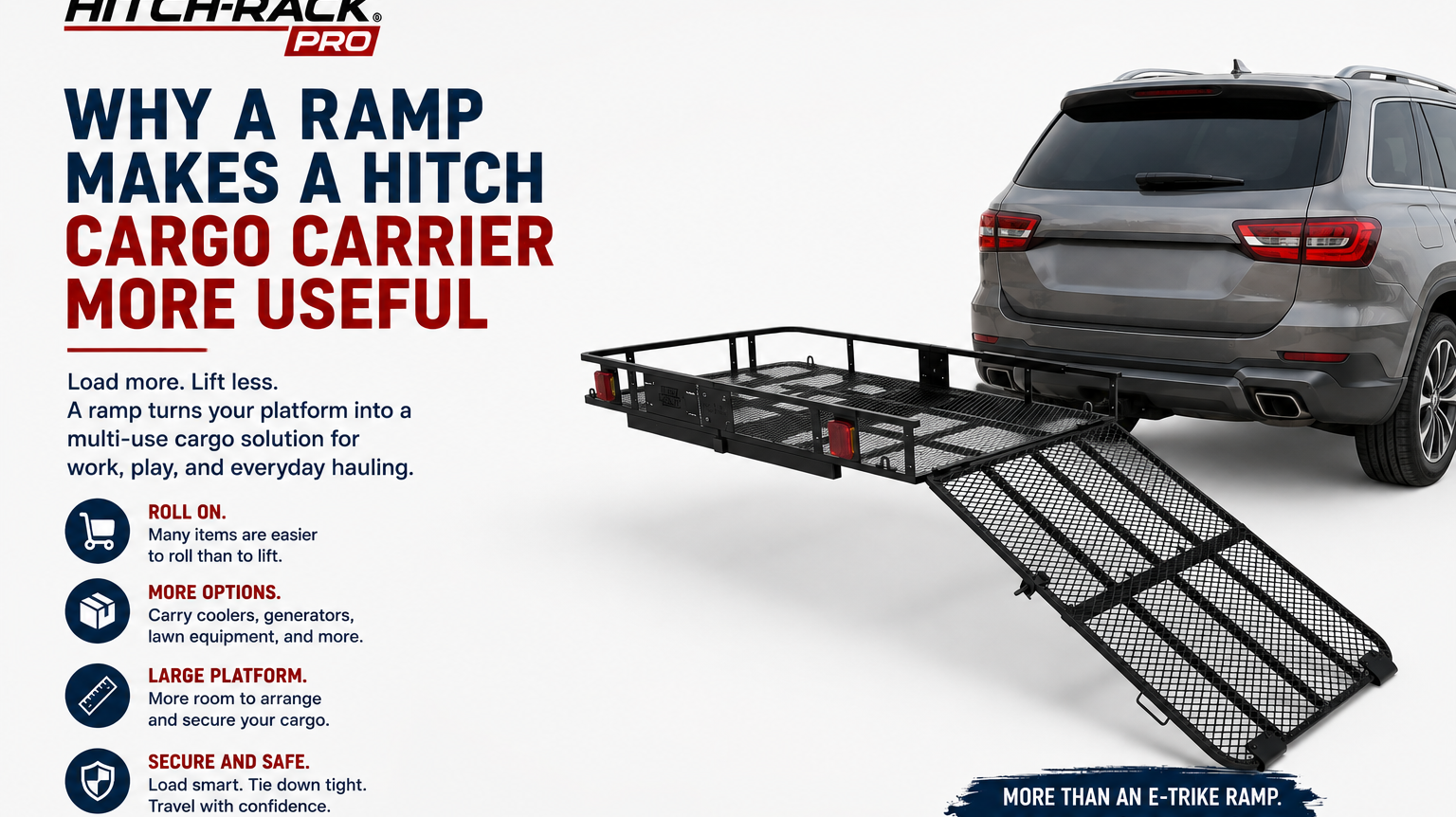
A Ramp Makes a Platform Even More Useful
A platform carrier equipped with a ramp isn't limited to things you can easily lift onto it.
A ramp can make it easier to load certain heavy or wheeled items onto the platform rather than lifting them from the ground.
That opens up additional possibilities for equipment such as wheeled coolers, generators, pressure washers, lawn and garden equipment, and other appropriate cargo.
Of course, the item still needs to fit the platform and remain within the applicable weight limits of the carrier, hitch, and vehicle.
When a Utility Trailer Is the Better Choice
There are plenty of situations where we'd recommend the trailer.
If you're regularly transporting very heavy equipment, large quantities of building materials, oversized cargo, or loads that exceed what your vehicle can safely support on a hitch-mounted carrier, use a properly rated trailer.
The trailer's wheels and axle are there for a reason.
A cargo platform works best when you need additional space, not when you're trying to turn the back of your vehicle into a substitute for a pickup truck or heavy-duty trailer.
When a Hitch Cargo Carrier Makes More Sense
A platform carrier becomes particularly attractive when your cargo isn't excessively heavy but takes up a lot of room.
Think about a family road trip.
Your cooler, luggage, camping equipment, and storage totes might completely fill the cargo area of an SUV. Moving some of those items onto a hitch-mounted platform can free up valuable interior space without requiring you to tow a trailer for the entire trip.
It's also useful when you're hauling dirty, muddy, wet, or bulky equipment that you'd rather not put inside your vehicle.
When the job fits within the carrier's capabilities, it's a very convenient solution.
Which Should You Choose?
The decision really comes down to the job.
Choose a utility trailer when you need greater weight capacity, significantly more cargo space, or the ability to transport loads that shouldn't be supported entirely by the vehicle's hitch.
Choose a hitch-mounted platform carrier when you want convenient additional cargo space without the storage, maneuvering, and maintenance that come with owning a trailer.
There's no reason to make the equipment more complicated than the job requires.
For many camping trips, vacations, outdoor activities, and everyday hauling needs, a large platform carrier provides exactly the additional space you need—without having to tow a trailer behind you.
More Than an E-Trike Rack
Hitch-Rack Pro platform carriers were designed with the size and strength needed to transport e-trikes, but that doesn't mean transporting an e-trike has to be their only purpose.
Remove the e-trike and you still have a large platform.
That platform can be used for many different types of appropriate cargo, making it useful even on trips when the e-trike stays home.
That's one of the biggest advantages of a multi-use platform rack: you're not buying something that has only one job.


Comments
E-trike and e-bike. 170lbs total
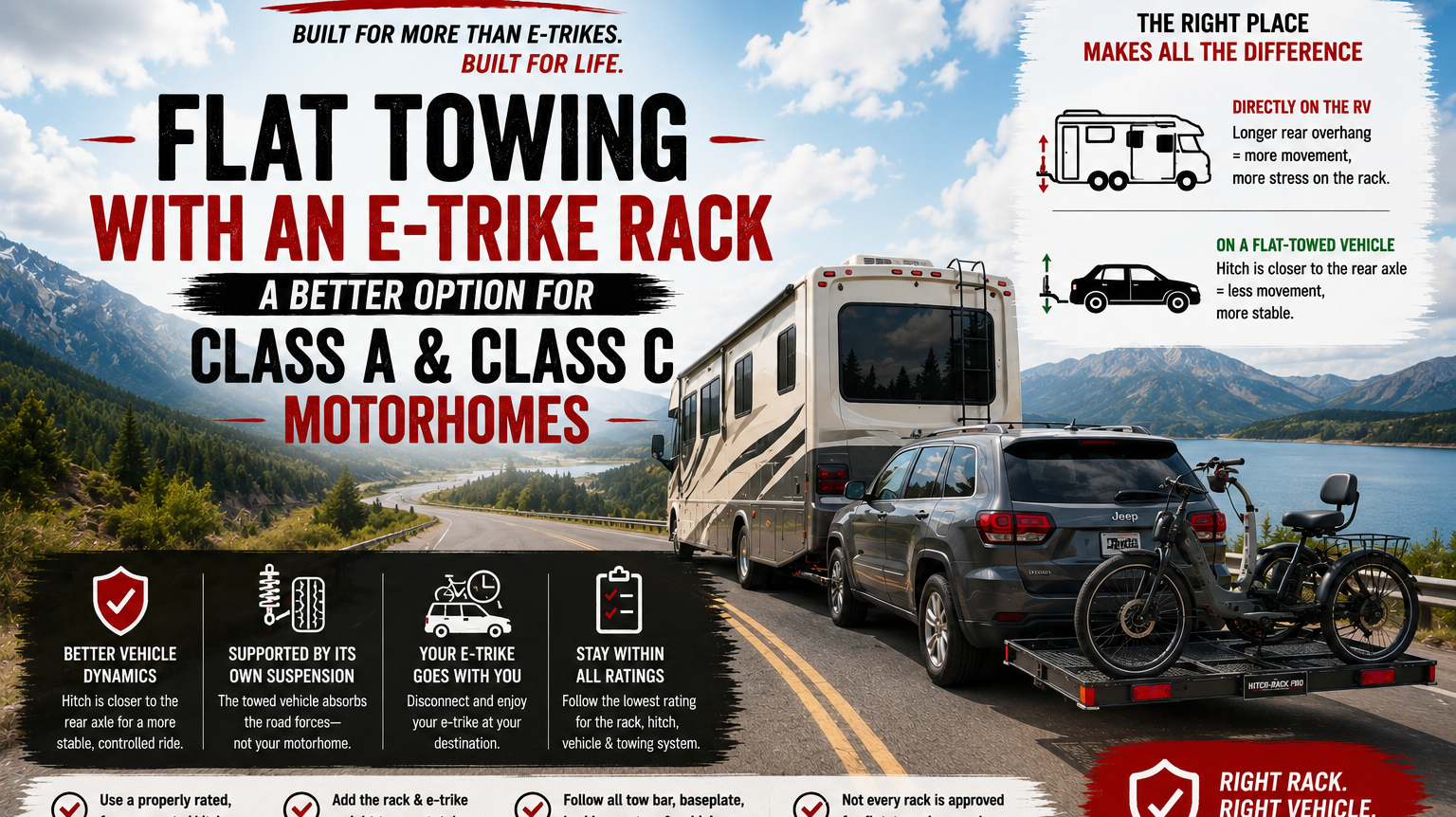
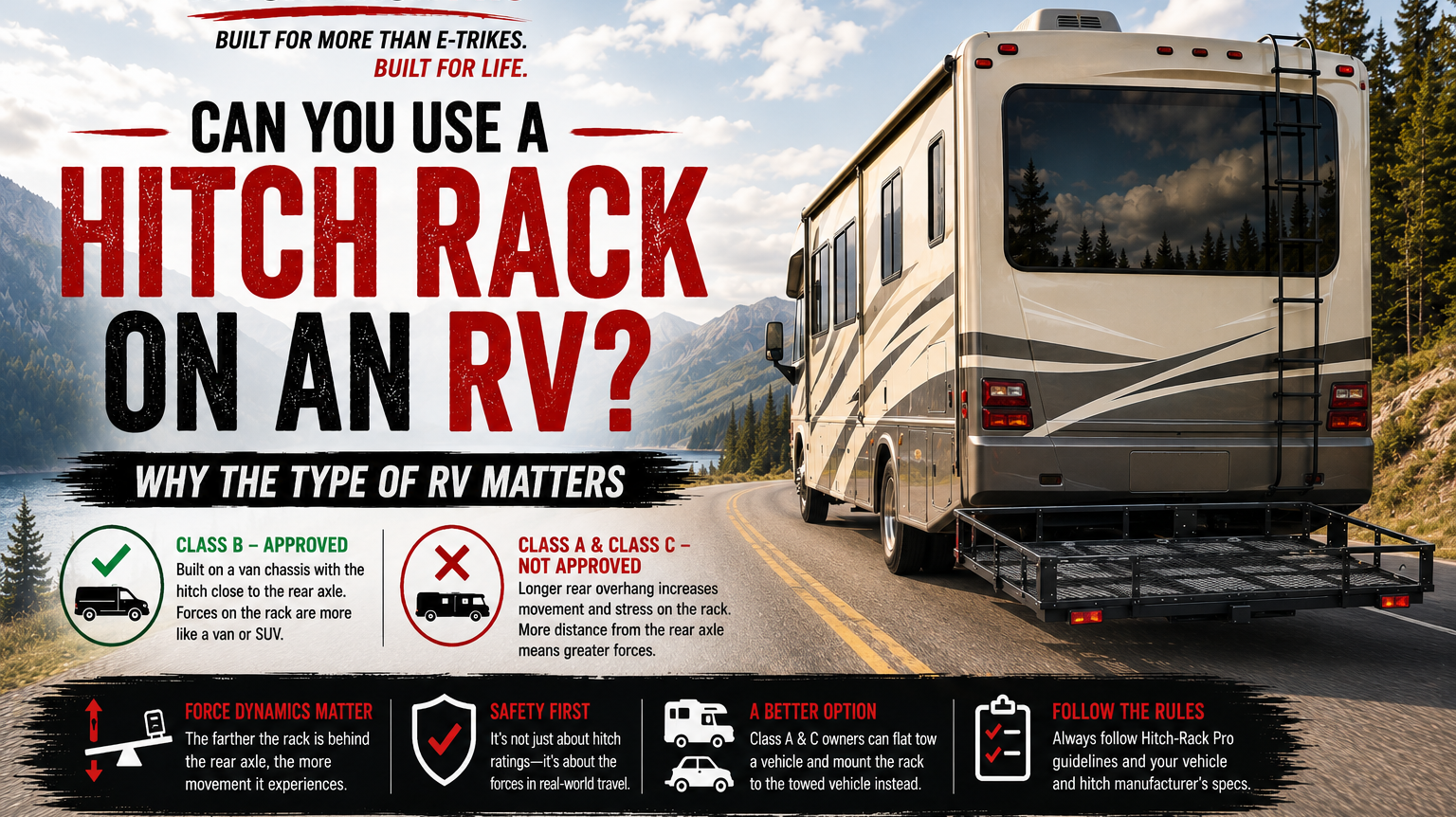
Can I install this on my 35ft 5th wheel RV 500lb trailer hitch? With a 95lb e-trike and a 65 lb e-bike? Positioned properly? Still less than 200lbs.
Can I install this on my 35ft 5th wheel RV 500lb trailer hitch? With a 95lb e-trike and a 65 lb e-bike? Positioned properly? Still less than 200lbs.