
How Much Does an E-Trike Weigh? Why Weight Matters When Choosing a Hitch Rack
Electric trikes offer stability, comfort, cargo capacity, and electric assistance—but all of those features come with something else:
Weight.
An e-trike can weigh considerably more than a conventional bicycle, and sometimes significantly more than a typical two-wheel e-bike.
That matters when it's time to transport one.
Choosing an e-trike carrier isn't simply a matter of finding a rack that physically fits your trike. You also need to consider the weight of the trike, the weight of the carrier, and the applicable limits of your vehicle and receiver hitch.
Here's what to consider before loading up.
How Much Does an Electric Trike Weigh?
There isn't one standard weight for an e-trike.
Weight varies based on factors such as:
-
Frame construction
-
Motor size
-
Battery size
-
Wheel and tire size
-
Suspension
-
Seat design
-
Baskets
-
Cargo accessories
-
Folding mechanisms
-
Other installed equipment
Some lightweight models may be relatively easy to maneuver, while larger cargo-oriented e-trikes can be substantially heavier.
That's why you shouldn't choose a carrier based on an estimate.
Find the actual weight of your specific e-trike.
The manufacturer's specifications are a good starting point, but remember that accessories you add afterward can increase the real transportation weight.
Don't Forget the Battery
The battery can represent a meaningful portion of an e-trike's total weight.
Some owners remove the battery before transporting their trike.
Doing so may reduce the weight placed on the carrier and can make the trike somewhat easier to handle during loading.
However, battery removal doesn't automatically make an otherwise incompatible carrier or hitch suitable.
You still need to verify the complete transportation setup.
Also follow the e-trike and battery manufacturer's recommendations for battery removal, storage, and transportation.
Accessories Add Up
Your trike may not weigh the same today as it did when it left the factory.
Consider everything you've added.
A large rear basket, front basket, upgraded seat, mirrors, bags, locks, cargo boxes, or other accessories can increase the total weight.
A few pounds here and there may not seem significant individually.
Together, they can be.
When determining transportation weight, think about the trike as you actually use and transport it, not simply the base model listed in a catalog.
How to Weigh Your E-Trike at Home
Don't know exactly how much your e-trike weighs?
You don't necessarily need a large commercial scale to find out. We put together a video showing a practical way to weigh your e-trike yourself, so you can determine the actual weight of the trike you're planning to transport.
This can be especially helpful if you've added baskets, a different seat, storage accessories, mirrors, or other equipment since purchasing your trike.
Watch: How to Weigh an E-Trike
https://www.youtube.com/watch?v=0HrdfqqpEFc
Knowing the actual weight gives you a much better starting point when evaluating an e-trike carrier, your receiver hitch, and your vehicle's applicable limits.
And remember: if you remove the battery before transporting your e-trike, weigh the trike in the same configuration in which you plan to carry it.
The Rack Has Weight Too
This is one of the most important things to understand when choosing a hitch-mounted e-trike carrier.
Your vehicle isn't supporting only the trike.
It's supporting the carrier too.
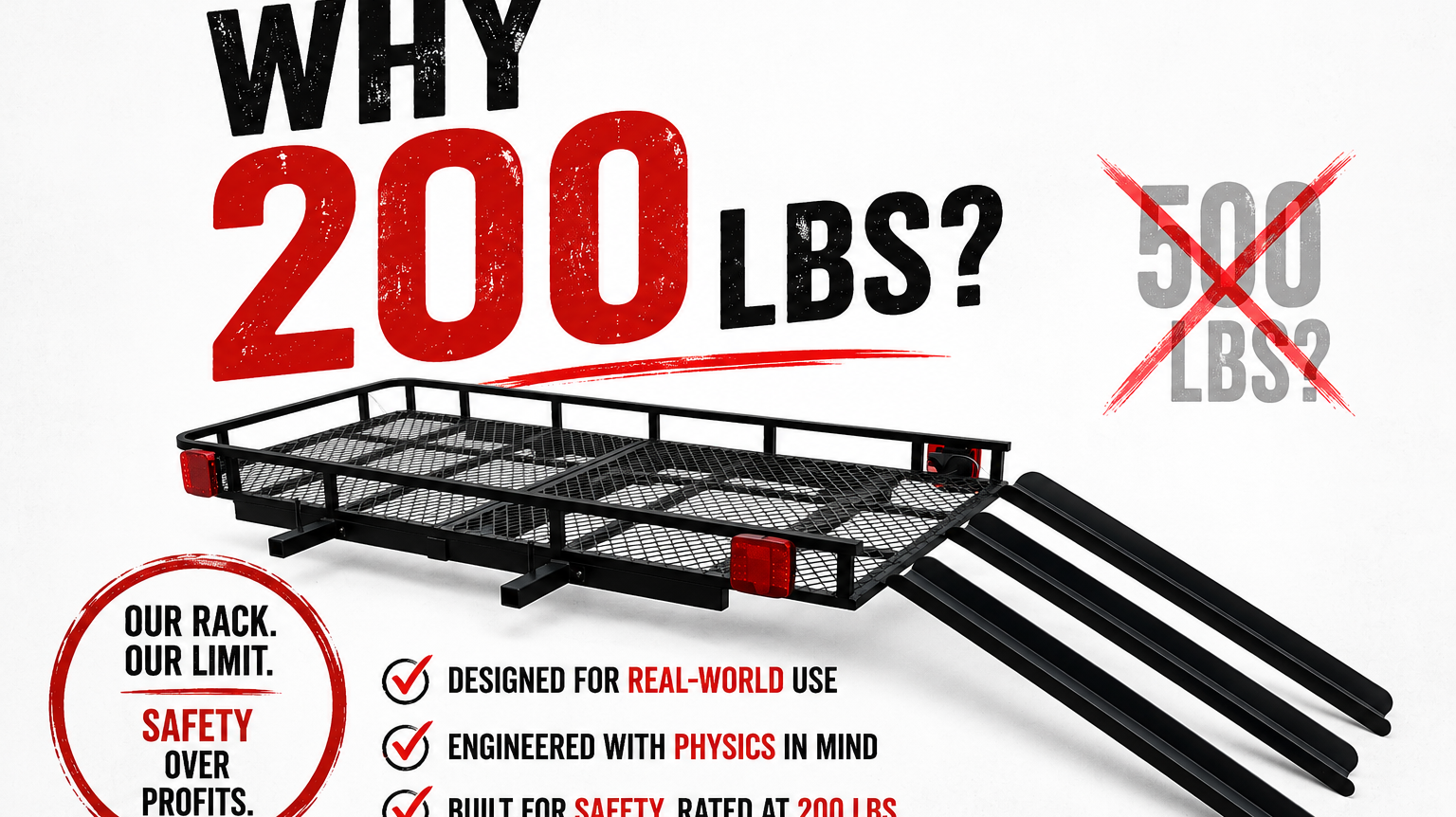
For example, if an e-trike weighed 90 pounds and the carrier weighed 100 pounds, the combined weight would already be:
190 pounds
And that's before considering any additional equipment placed on the carrier.
The exact numbers will vary with your equipment, but the principle is the same:
Trike weight + carrier weight + other carried equipment = total loaded carrier weight
That total needs to be considered against the applicable limitations of your setup.
Hitch Size and Hitch Capacity Are Not the Same Thing
Seeing a 2-inch receiver hitch on a vehicle does not automatically tell you how much weight the vehicle can support.
The receiver opening describes the physical hitch interface.
It doesn't by itself establish the allowable load.
Two vehicles can both have 2-inch receivers and have very different limitations.
Always check the specifications applicable to your:
Vehicle
Receiver hitch
Carrier
And don't assume one rating overrides another.
Your complete setup needs to operate within all applicable limits.
Why Weight Behind the Vehicle Matters
A hitch-mounted carrier positions weight behind the vehicle.
Unlike cargo placed inside the vehicle, that load is supported through the hitch and is located some distance behind the rear of the vehicle.
The farther a load is positioned from its support point, the more important proper design and adherence to the manufacturer's specifications become.
That's one reason you shouldn't determine carrier suitability based only on whether the hitch opening physically accepts the carrier.
The complete system matters.
What About Tongue Weight?
When researching hitch carriers, you'll probably encounter the term tongue weight.
Tongue weight is commonly associated with trailers, but hitch-mounted accessories also place a vertical load on the receiver.
The important point for an e-trike owner is simple:
Don't assume a published towing number tells you everything you need to know about carrying a heavy hitch-mounted rack.
Check your vehicle manufacturer's documentation for restrictions or ratings applicable to hitch-mounted accessories.
Also verify the requirements of the hitch and carrier manufacturers.
Weight Capacity Doesn't Mean Your Trike Fits
Here's another common mistake.
Imagine finding a rack advertised with enough capacity to support the weight of your e-trike.
Problem solved?
Not necessarily.
An e-trike carrier also needs to accommodate the trike's:
-
Three-wheel configuration
-
Overall width
-
Overall length
-
Wheelbase
-
Tire width
-
Wheel diameter
-
Securement requirements
A carrier capable of supporting 100 pounds isn't automatically capable of carrying every 100-pound cycle.
Weight capacity and physical compatibility are two separate questions.
You need the answer to both.
Why Loading Method Becomes More Important as Weight Increases
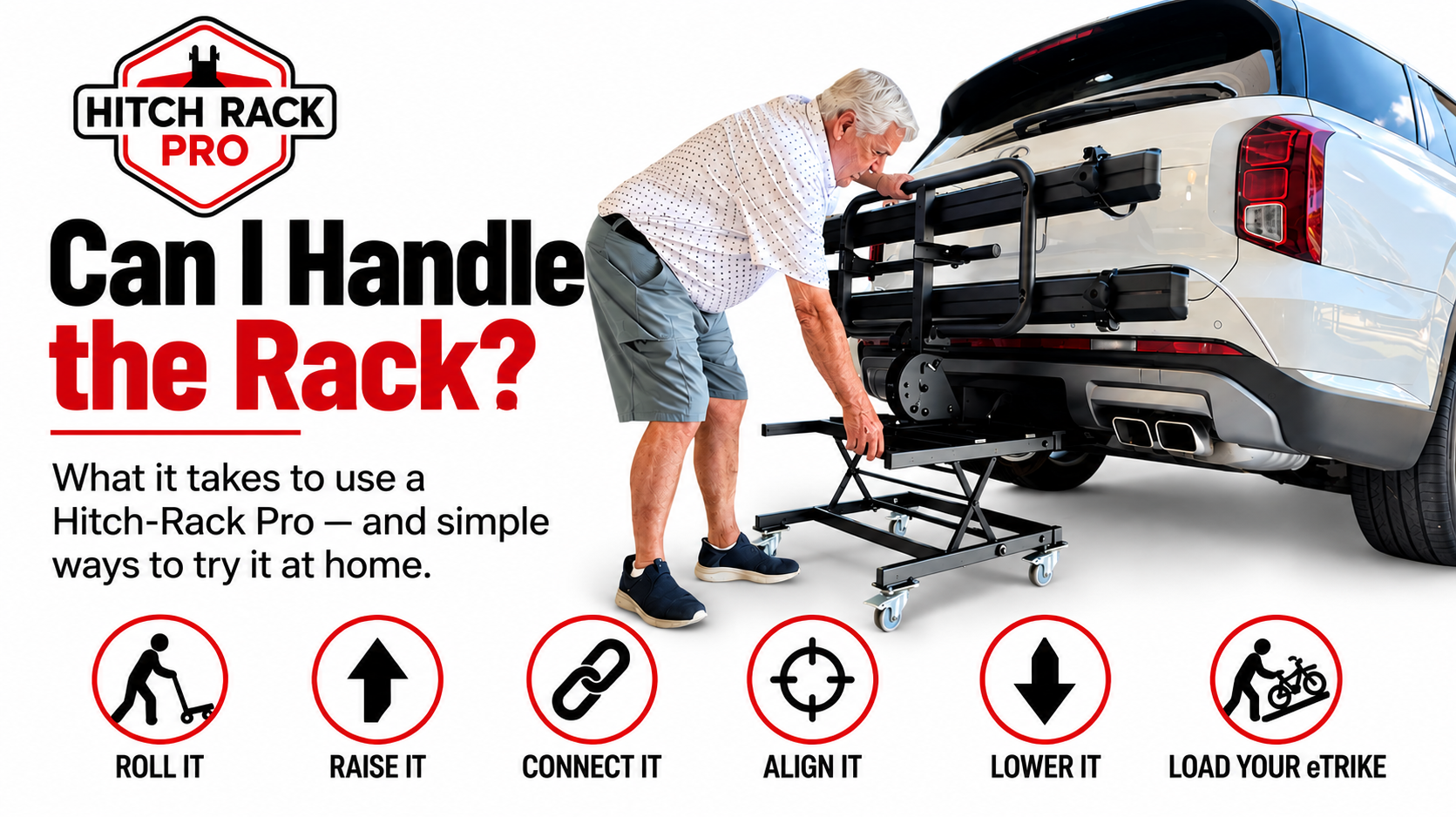
The heavier the e-trike, the less appealing lifting becomes.
Even if you technically can lift one end of your trike onto a carrier, that doesn't necessarily mean you'll want to do it every time you travel.
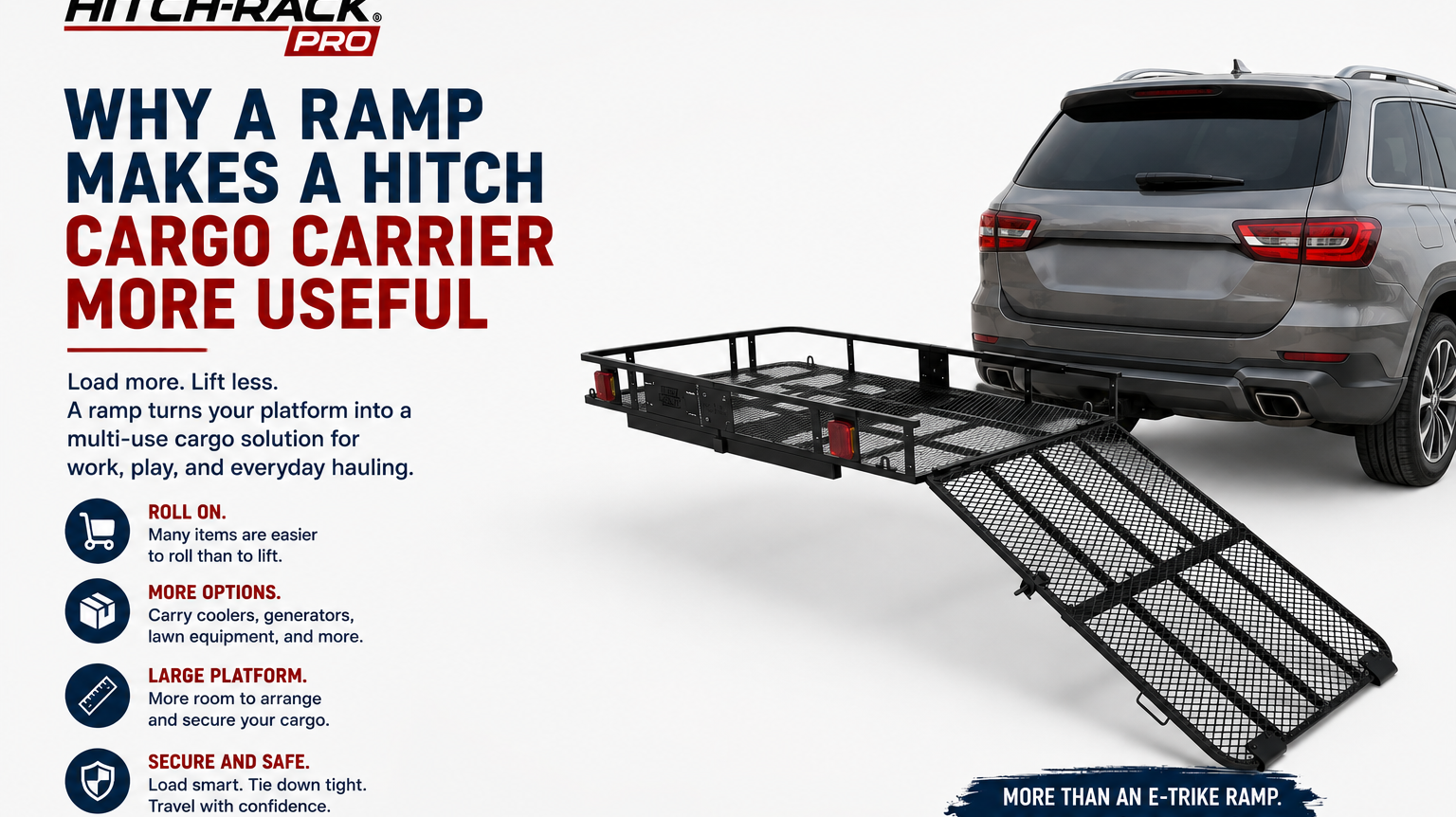
A ramp changes the process.
Instead of lifting the trike onto the carrier, you can roll it from the ground onto the platform.
For heavier e-trikes, that can be one of the most important features of the entire transportation system.
Ramp Design Matters Too
A ramp isn't useful simply because it reaches the ground.
You also need to control the trike while loading.
Remember that an e-trike has three wheels traveling up the ramps simultaneously.
With low-profile individual ramps, a tire that drifts sideways can potentially move off the edge.
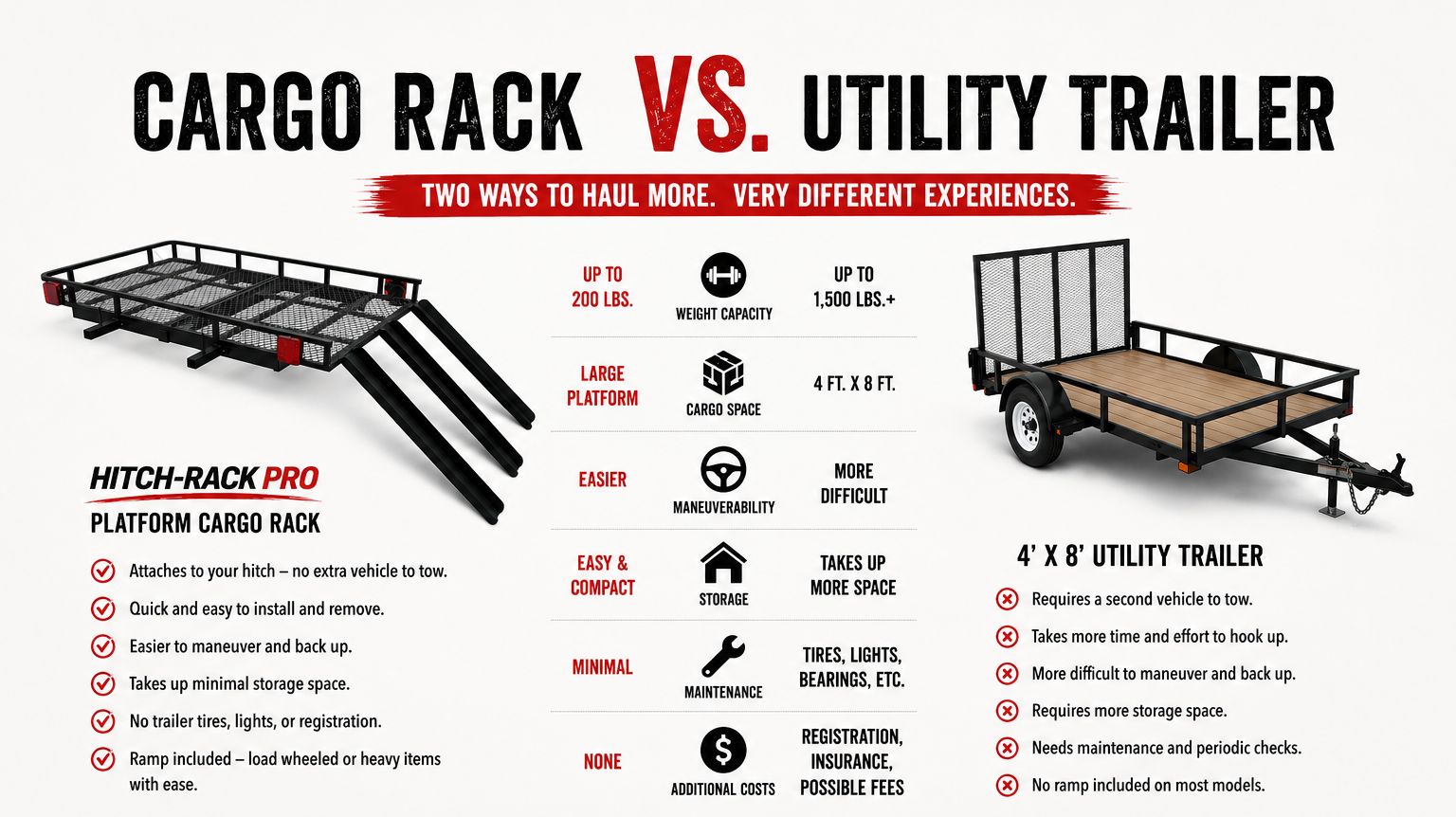
That's why Hitch-Rack Pro's detachable ramps use 2-inch-high sides designed to help guide the tires and keep them within the ramp channels during loading and unloading.
The heavier the trike, the more you'll appreciate having a controlled loading path.
Don't Forget Multiple E-Bikes or Trikes
Weight becomes even more important if your carrier configuration allows you to transport more than one cycle.
Two heavy e-bikes can add up quickly.
So can combinations of e-bikes and e-trikes.
Don't evaluate each cycle independently and forget about the combined load.
Add everything together.
That includes the carrier itself.
A Simple Pre-Trip Weight Checklist
Before transporting an e-trike, know these numbers:
1. E-trike weight
Include accessories that remain installed during transportation.
2. Battery weight
Know whether you're transporting the battery installed or removed.
3. Carrier weight
The carrier itself contributes to the load.
4. Additional cargo weight
Include other bikes, trikes, accessories, or cargo being transported on the carrier.
5. Vehicle and hitch limitations
Verify the applicable specifications rather than estimating.
6. Carrier capacity
Make sure your intended load and configuration are approved by the carrier manufacturer.
Once you know the numbers, you can make a much more informed decision.
Don't Buy the Rack First and Measure Later
This may be the biggest takeaway.
Before buying an e-trike carrier, get out the scale, specification sheet, and tape measure.
Know what you're transporting.
Then choose equipment appropriate for it.
Buying a carrier first and hoping your trike fits afterward can lead to an expensive mistake.
Hitch-Rack Pro: Designed Around Heavy Electric Cycles
At Hitch-Rack Pro, we recognize that transporting an e-trike isn't the same as carrying a conventional bicycle.
Weight is part of that difference.
So are width, three-wheel geometry, loading, and securement.
That's why we approach the carrier as a complete transportation system rather than simply a place to hang a bicycle.
And because our platform-style design can serve purposes beyond transporting an e-trike, you're getting a carrier that can remain useful for other appropriate loads as well.
Know Your Weight Before You Hit the Road
Your e-trike gives you the freedom to ride farther.
The right carrier gives you the freedom to take it farther.
Before choosing that carrier, know exactly what you're asking your vehicle and hitch to support.
Measure the trike.
Know the weight.
Check the specifications.
Choose the carrier accordingly.
A few minutes spent checking the numbers before you buy can save you a lot of trouble after you hit the road.
Frequently Asked Questions
How much does an e-trike weigh?
Electric trike weight varies considerably depending on the frame, motor, battery, wheels, accessories, and intended use. Check the specifications for your particular model rather than relying on a general estimate.
Should I remove my e-trike battery before transporting it?
Some owners remove the battery to reduce transported trike weight. Follow the e-trike and battery manufacturer's instructions regarding removal and transportation.
Does removing the battery increase my rack's weight capacity?
No. The carrier's rated capacity doesn't change. Removing the battery may reduce the weight of the trike being carried, but all other compatibility and capacity requirements still apply.
Does a 2-inch hitch mean it can carry a heavy e-trike rack?
No. Receiver size alone doesn't establish the allowable load. Check the applicable specifications and restrictions for the vehicle, receiver hitch, and carrier.
Do I include the rack's weight when checking my setup?
Yes. The vehicle and hitch are supporting the carrier as well as the trike and other equipment placed on it. Consider the complete loaded system.
Is a loading ramp important for a heavy e-trike?
It can be extremely useful. A ramp allows the trike to be rolled onto the carrier instead of requiring substantial lifting.